
Backend Development for Mobile Apps and Product Systems
The app is only the front door
Send us what you have. We will tell you what the system needs before you build the wrong thing.
What users see on their phone is important, but it is rarely the whole product. A serious app usually depends on APIs, databases, authentication, roles, permissions, admin tools, dashboards, notifications, analytics, integrations, payments, AI features, deployment, monitoring, and recovery basics.
Underlabs builds the backend systems behind serious apps. The goal is not to make every backend complicated. The goal is to build the right product system for the version you are actually launching, with clear scope, practical architecture, and senior technical execution.
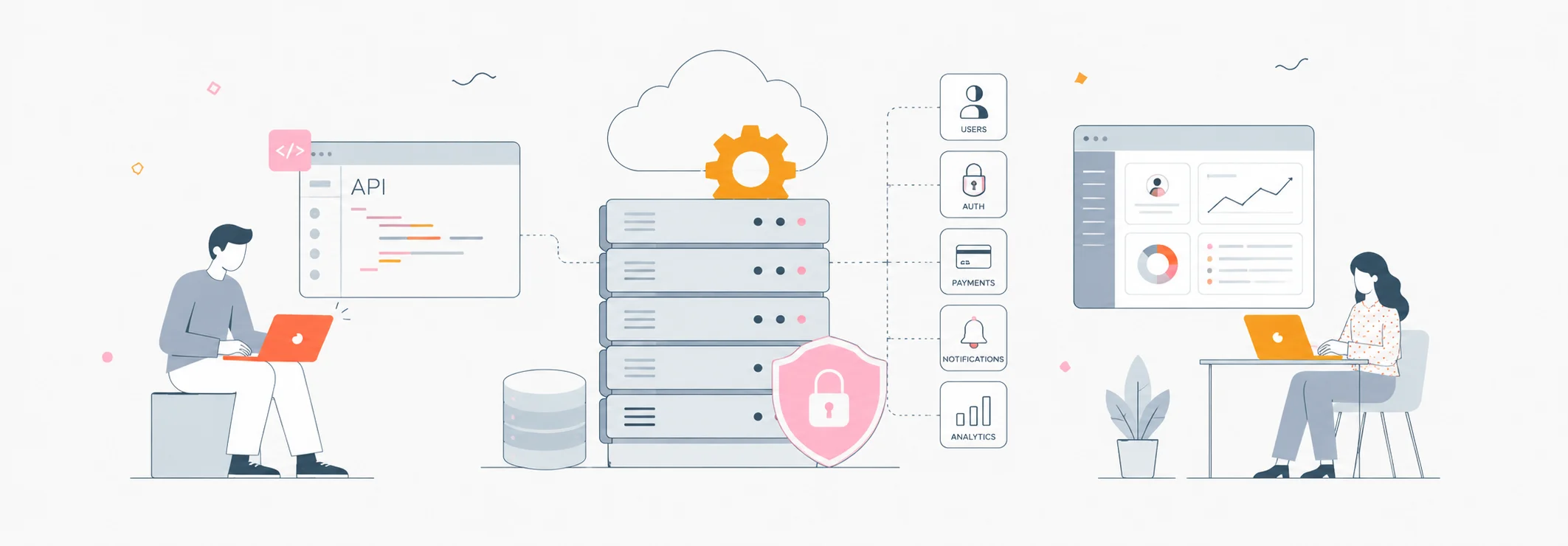
A polished interface can hide a fragile backend.
The product system behind it is where launches become real.
Who this is for
This service is for teams that have moved past the idea that an app is only a set of screens. You may already have a mobile app design, a prototype, a web app that needs mobile support, or a business process currently running through spreadsheets, emails, manual approvals, and disconnected tools.
It is especially useful for app founders, teams rebuilding fragile systems, product leads who need APIs and admin tools, buyers comparing technical partners, teams adding AI features, and organizations that need a practical version 1 without pretending it is an enterprise platform.
Why screens are not the product
A user taps create account. The app needs authentication, validation, verification, session handling, recovery, error states, and sometimes social login or magic links. A user pays. The app needs product logic, webhooks, receipts, failed payment handling, subscription status, cancellation behavior, and support visibility.
The screen is the visible request. The backend is the system that makes the request safe, useful, measurable, and recoverable.
The backend system behind the app
A backend is not just a database. It is the operating layer of the product. It answers who the user is, what they can see, what they can change, how data belongs to organizations or roles, which events trigger notifications, what admins can review, and what happens when integrations fail.
For a small version 1, the answers should be focused. The goal is fit, not size.
What Underlabs builds
Underlabs builds backend systems for mobile apps, web apps, internal tools, dashboards, and product platforms. The work can include new builds, rebuilds, rescue work, integration work, AI feature support, and backend systems for products that started as prototypes.
For a marketplace, that may mean users, listings, payments, messaging, search, admin review, and trust workflows. For a membership app, it may mean authentication, subscriptions, access control, notifications, content management, and analytics.
What affects cost and timeline
Backend cost depends on the product system, not the number of screens. The biggest factors usually include user roles, permissions, data model complexity, authentication, payment logic, admin tools, dashboards, integrations, AI behavior, file storage, notifications, analytics, migrations, release requirements, and support needs.
A practical build plan should separate what is required for version 1 from what should wait.
Rescue and rebuild work
Not every backend project starts clean. Sometimes the product exists, but the backend is fragile, the original developer is gone, the database is confusing, the admin tool is missing, or the team is afraid to change anything because every update creates another problem.
Rescue work starts by understanding what exists, what breaks often, what is business-critical, where the data lives, who has access, how deployments work, and what would be dangerous to change quickly.
Core backend components
API design and development
Database design
Authentication
Roles and permissions
Admin tools
Dashboards
Product operations
Analytics
Notifications
Payment integrations
Third-party integrations
File uploads and storage
Audit logs
Launch support
AI feature support
Deployment environments
Monitoring and recovery basics
App release support
Staged rebuilds
Maintenance planning

Tradeoffs: simple, scalable, and maintainable
A version 1 should not be built like a bank unless it is one. It should also not be built like a disposable demo if real users, payments, or business operations depend on it.
Simple does not mean careless. Scalable does not mean overengineered. Maintainable does not mean slow. The right backend often has a clear data model, practical APIs, reliable authentication, sensible permissions, basic admin tools, useful analytics, a staging environment, clean deployment habits, and enough logs to debug issues.
Underlabs aims for the useful middle: senior technical execution, clear scope, and a backend that matches what the product really needs. Useful related pages include Mobile App Development in Montreal, App MVP Development in Canada, App Cost in Canada, and AI Launch Inspector.
Good fit / not a good fit
You are building a mobile app that needs APIs, users, data, and admin tools. You need authentication, roles, permissions, subscriptions, payments, notifications, integrations, analytics, AI features, or a serious backend plan before building too much.
This may not be the right fit if you only need a static marketing website, want a backend built without discovery, expect every possible future feature in version 1, or want exaggerated scalability claims instead of practical tradeoffs.
FAQ
Do all apps need a custom backend?
No. Some apps can use existing platforms, no-code tools, low-code tools, managed services, or a lightweight backend. If the app requires custom workflows, roles, permissions, payments, integrations, admin tools, analytics, AI features, or operational control, a custom or semi-custom backend may be appropriate.
Can you build the backend if another team builds the app?
Yes. Underlabs can build backend systems for mobile apps or web apps built by another team, as long as responsibilities are clear. The work usually starts with API expectations, data model planning, authentication flow, environments, testing process, and communication between teams.
Can you also build the mobile app?
Yes. Underlabs builds mobile apps and the systems behind them. In many cases, this is cleaner because the app, backend, admin tools, notifications, analytics, and launch support can be planned together.
Can you work with an existing backend?
Yes. Existing backend work usually begins with a technical review of the current codebase, database, APIs, deployment process, integrations, authentication, and known pain points. From there, we can recommend stabilization, targeted fixes, staged rebuilds, or a fuller rebuild.
Can you add AI features to an existing app?
Yes, when the product use case is clear. AI features usually need more than a model call. They may need prompt design, structured outputs, user permissions, content moderation, usage limits, cost controls, logging, fallback behavior, and human review.
How much does backend development cost?
It depends on scope. Backend cost is affected by users, roles, permissions, data complexity, integrations, payments, notifications, analytics, admin tools, AI features, deployment, and testing requirements. The right first step is to define what the product needs now, what should wait, and what would be expensive to change later.
Do you provide hosting, deployment, and maintenance?
Underlabs can help with deployment environments, launch support, maintenance planning, monitoring basics, and recovery assumptions. Some products need simple managed hosting. Others need staging and production environments, scheduled jobs, logs, alerts, backups, and a more formal release process.