
AI App Development Company for Serious Product Builds
AI can make software faster to build. It does not remove the need for product judgment.
Send us what you want to build. We will help turn it into a practical product plan, not just a prompt demo.
A serious AI app is not just a chatbot added to a screen. It is a product system. It may need mobile apps, web dashboards, backend APIs, admin tools, authentication, permissions, file handling, analytics, AI workflows, integrations, notifications, model routing, human review, and launch support.
Underlabs builds the system behind AI-powered apps. We work with founders, operators, and product teams that want to use AI in a practical way: to automate work, support decisions, personalize experiences, analyze information, generate structured outputs, improve internal operations, or create new product features.
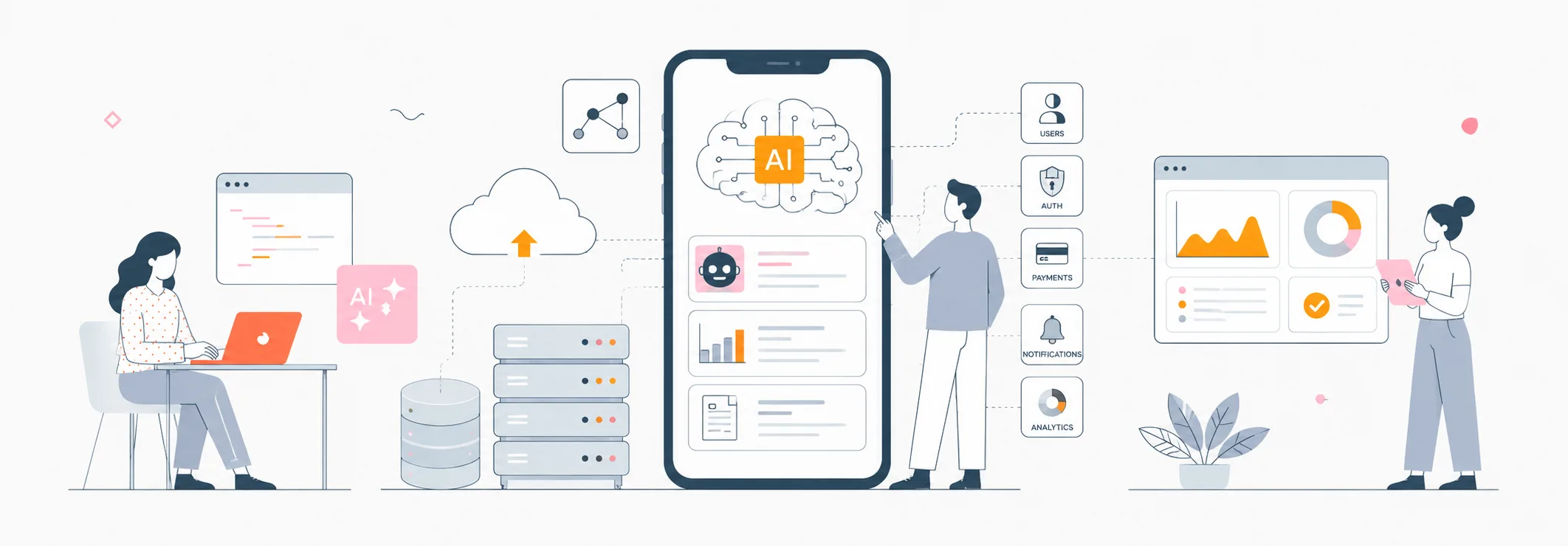
The goal is not to force AI into every corner of the product.
The goal is to understand where AI is useful.
Who this is for
This page is for teams that want to build an AI-supported app, product, workflow, or platform with serious technical execution behind it. You may have an idea for an AI app, a prototype built with AI tools, a traditional app that needs AI features, or an internal workflow that still depends on spreadsheets, emails, manual review, or repeated human effort.
It is especially relevant for founders building AI-powered mobile or web apps, businesses adding AI features to existing products, operators replacing manual processes with structured automation, product leaders defining a practical version 1, and teams comparing AI app development companies and technical partners.
AI is a feature, not the product
Many AI app ideas start with a model. That is understandable. The model can summarize, classify, generate, translate, reason over documents, answer questions, extract structured data, help users make decisions, or automate parts of a workflow.
But the product is not the model. The product is the full experience around it: signup, trust, data entry, useful outputs, editing, saving, sharing, exporting, review, history, notifications, billing, support, analytics, and admin oversight.
The system around AI
A model call can be impressive in a demo. A product needs to work repeatedly for real users. That means the AI feature has to sit inside clear user flows, reliable data capture, backend APIs, authentication, roles, permissions, prompt and context management, structured outputs, cost controls, analytics, privacy alignment, release support, and maintenance.
This is why AI app development is still app development. The AI changes what is possible. It does not remove the need for engineering.
What Underlabs builds
Underlabs builds AI-supported mobile apps, web apps, backend systems, admin tools, dashboards, workflows, and product platforms. The exact shape depends on the business case.
Some products need a mobile-first app with AI features inside the user experience. Some need an internal dashboard where staff can use AI to review, summarize, or process information. Some need a workflow engine that combines forms, data, rules, notifications, and AI-generated recommendations.
Version 1 scope
The point is not to build every component at once. The point is to define the product system that makes sense for the first real version.
For some clients, that means a focused app MVP. For others, it means stabilizing a prototype. For others, it means integrating AI into an existing product without breaking what already works.
Practical AI features
AI features should be designed around useful outcomes, not novelty. A good AI feature helps a user do something faster, understand something better, reduce repetitive work, or make a better decision.
Not every workflow needs an agent. Not every screen needs a chat interface. Sometimes the best AI feature is invisible: classification, extraction, scoring, routing, summarization, or review support behind a normal interface.
Product surfaces
Mobile app development
Web app development
Backend API development
Database design
Authentication
Roles and permissions
Admin tools
Dashboards
AI workflows
AI feature design
Prompt workflows
Structured AI outputs
Document processing
File upload and storage
Retrieval-augmented generation when appropriate
Model routing
Human review
Launch systems
Third-party integrations
Payment integrations
Notifications
Analytics and reporting
Usage and cost tracking
Launch support
Maintenance planning
Pre-launch review
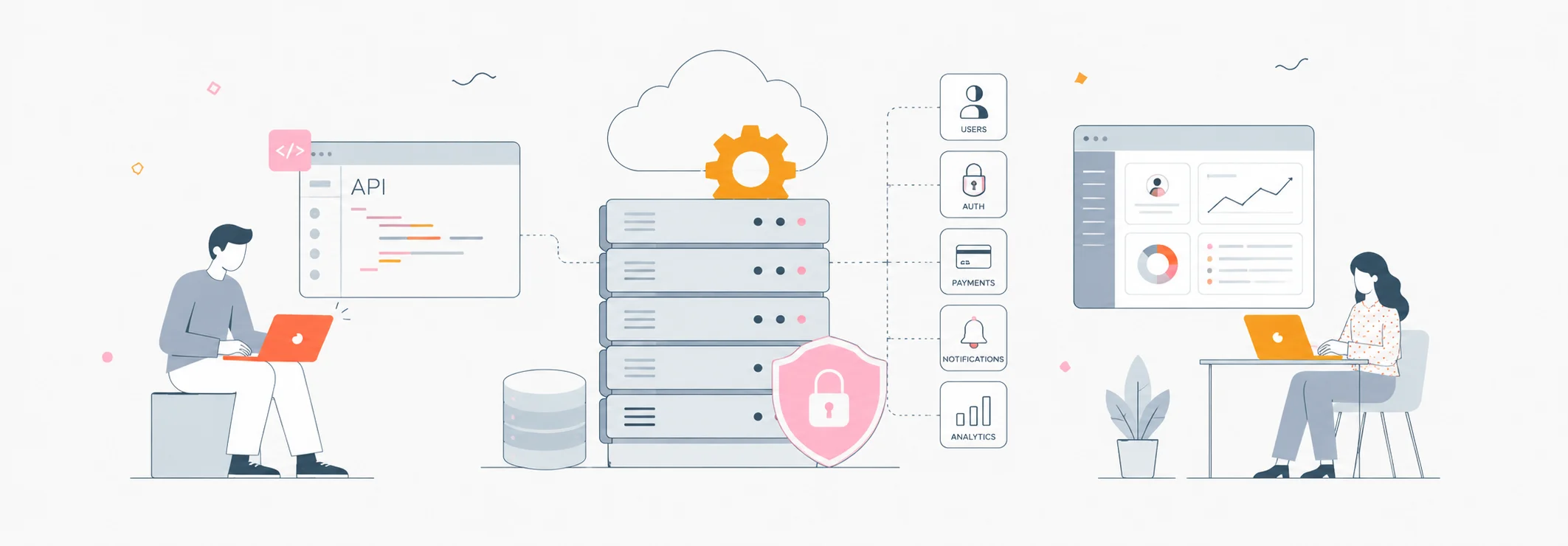
The system behind an AI app
APIs and databases
APIs connect the app experience to the product system. They handle user requests, data retrieval, AI workflows, payment states, notifications, and admin actions. Good APIs make the product easier to maintain and extend.
The database needs to store important information clearly, including users, organizations, roles, messages, files, AI outputs, usage records, payment states, audit logs, and workflow status. AI does not remove the need for a good data model. In some products, it makes the data model more important.
Prompts and structured outputs
AI output depends heavily on context. A production product needs a way to manage prompts, user inputs, system instructions, retrieved content, examples, constraints, and structured response formats. This should not be scattered randomly through the codebase.
For many apps, free-form AI text is not enough. The product may need structured output: scores, categories, next actions, summaries, JSON objects, recommendations, labels, or extracted fields.
Cost, review, and analytics
AI usage has a real operating cost. A product may need usage limits, plan-based access, request throttling, logging, model selection, fallback logic, and internal reporting. Cost control should be designed before launch.
AI products often need human oversight. Admins may need to review outputs, inspect user reports, correct errors, see usage patterns, disable accounts, manage content, or investigate problematic cases. Analytics should answer practical questions, not decorate a dashboard.
Mobile AI apps
Many AI products work best as mobile apps. A mobile app can capture photos, voice, location, quick notes, habits, messages, forms, approvals, or field activity. It can use push notifications. It can support repeat use. It can make the AI feature available in the moment where the user actually needs it.
But mobile adds constraints. The app needs good onboarding, account handling, real-device testing, App Store and Google Play release planning, push notification testing, backend compatibility across app versions, performance attention, and careful handling of permissions, files, camera, microphone, offline assumptions, and user trust.
Useful related page: Mobile App Development in Montreal.
AI prototypes and MVPs
A prototype is not the same thing as a launch-ready product. Prototypes are useful because they test the idea, explore the workflow, show stakeholders what is possible, and expose unknowns. The mistake is treating the prototype as if it is already the product.
A proper version 1 needs sharper decisions: who the first user is, what problem is being solved, what AI does better than normal software, what data is needed, what output should be produced, what an admin needs to see, what happens when AI is wrong, and what can wait.
Useful related page: App MVP Development in Canada.
When AI should not be used
A good AI app development company should be able to tell you when AI is the wrong tool. Some problems are better solved with rules, forms, search, filters, templates, dashboards, or normal automation.
AI may be a poor fit when the output must be perfectly deterministic, simple rules solve the problem clearly, the workflow cannot tolerate uncertainty, the feature is hard to explain or trust, or the AI cost is not justified by the value.
The best AI products often combine normal software and AI carefully.
Cost, launch readiness, and fit
What affects cost and timeline
AI app development cost depends on the product system, not just the AI feature. The main factors include user types, mobile or web scope, backend complexity, authentication, payments, admin tools, dashboards, AI workflow complexity, model calls, document processing, integrations, privacy requirements, human review, analytics, testing, launch timeline, and maintenance expectations.
Useful related page: App Cost in Canada.
AI-built products that need review
Some teams already built something with AI-assisted tools. The product may look close. The demo may work. The landing page may be live. The app may already have authentication, payments, dashboards, or AI features.
Before launch, it needs review. Production issues often hide in auth, payments, mobile behavior, accessibility, privacy, analytics, deployment, backend structure, and recovery paths.
Useful related page: AI Launch Inspector.
Backend systems behind AI
Most serious AI apps need a backend to manage users, permissions, data, files, prompts, model calls, outputs, costs, logs, analytics, admin review, integrations, payments, and recovery behavior.
A simple prototype may not need much backend work. A product used by real users usually does.
Useful related page: App Backend Development.
Good fit / not a good fit
- You want to build an AI-powered mobile or web app.
- You have a workflow that could benefit from AI-assisted automation.
- You need backend systems, admin tools, dashboards, and AI features together.
- You are building a serious version 1 and need technical judgment.
- You already built a prototype and need production planning.
- You want practical execution, not agency theatre.
- You understand that AI still needs QA, privacy thinking, analytics, and maintenance.
- You want AI added only because it sounds marketable.
- You expect a model call to replace product design.
- You want exaggerated guarantees about accuracy or automation.
- You need formal compliance certification without a proper compliance process.
- You want a large platform built before validating the core workflow.
- You are not willing to define users, data, workflows, and business rules.
- You want the cheapest possible build rather than accountable technical execution.
FAQ
What does an AI app development company actually do?
An AI app development company helps design and build software products that use AI as part of the user experience, workflow, or backend system. That can include mobile apps, web apps, dashboards, admin tools, APIs, databases, AI workflows, prompt systems, integrations, analytics, and launch support.
Can you build an AI mobile app?
Yes. Underlabs builds mobile apps and backend systems, including apps with AI-supported features such as guided workflows, smart intake, document analysis, recommendations, personalization, AI-generated content, or internal assistant tools.
Can you add AI to an existing app?
Yes, when the use case makes sense. The first step is understanding the current product, backend, data, user flows, and business goals. From there, we can identify where AI would be useful and where normal software is better.
Do you build chatbots?
Sometimes. A chat interface can be useful, but it is not always the best interface for an AI product. Many AI features are better as forms, guided flows, suggestions, summaries, classifications, admin tools, or background automation.
Can you build AI agents?
Yes, where agent-style behavior is appropriate. But many workflows do not need a fully autonomous agent. They need a structured process with AI assistance, clear limits, logs, review, and fallback behavior.
Which AI models do you use?
The model depends on the product needs. Some products need strong reasoning. Some need speed. Some need lower operating cost. Some need vision, audio, document processing, structured outputs, or privacy-sensitive routing.
Can you use OpenAI, Claude, Gemini, or other model providers?
Yes, depending on the project requirements. Different providers and models have different strengths, costs, latency, tooling, and privacy considerations. The right choice depends on what the feature needs to do and how it will be used in production.
Do AI apps need a backend?
Most serious AI apps do. A backend is needed to manage users, permissions, data, files, model calls, prompts, analytics, payments, usage limits, admin review, logs, and integrations.
Can you work with private business data?
Potentially, yes. The important part is designing the data flow carefully. We need to understand what data is collected, where it is stored, what is sent to AI providers, what is retained, what is deleted, and what users or internal teams need to know.
Can you guarantee AI accuracy?
No. AI systems can make mistakes. A serious product should be designed with that reality in mind. Depending on the use case, that may mean human review, confidence thresholds, citations, structured outputs, fallback behavior, audit logs, or limiting what the AI is allowed to decide.
How much does it cost to build an AI app?
It depends on the product. A focused AI tool may be relatively contained. A full mobile app with authentication, payments, backend systems, AI workflows, admin tools, analytics, integrations, and launch support is a larger build. The practical first step is to define the version 1 scope and separate what is required from what should wait.
Can you review an AI app we already built?
Yes. If you already built an AI app, website, workflow, or prototype, Underlabs can review it before launch. We can inspect user flows, auth, payments, mobile behavior, accessibility, privacy, analytics, deployment, backend structure, and obvious launch risks. For that, see the AI Launch Inspector.